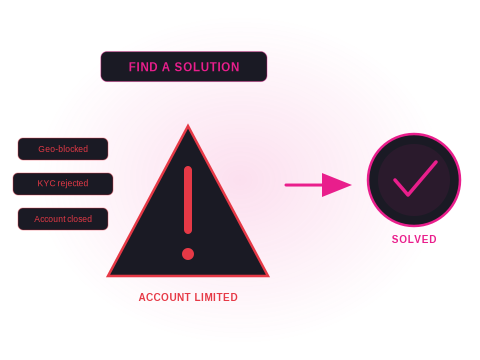
You try to log in and your account is locked. Or you get an email, often brief, often vague, saying your account has been closed and your balance will be returned. No explanation. No right of appeal offered. Just a closed door where your betting account used to be.
For recreational bettors, that's frustrating. For serious bettors who leaned on that account for regular activity, it can feel like a chunk of the operation has been amputated. Either way, understanding why it happened and what your options are now is the useful response, not stewing over it.
Why Bookmakers Actually Close Accounts
Bookmakers close accounts for a range of reasons, but the most common for bettors who haven't broken any rules is profitability. If your account shows consistent net wins over time, you have become an unprofitable customer by the bookmaker's commercial model. Their business depends on a broad base of recreational bettors losing; accounts that don't fit that profile are closed or restricted.
The mechanism is similar to the account limiting process: profiling algorithms monitor stake patterns, market selection, timing of bets relative to line movement, and long-run win rates. When these metrics identify a bettor who is likely to remain profitable over time, the bookmaker's response is to restrict and ultimately close. The distinction between a limit and a closure is largely a matter of degree; bettors who have been limited but continue betting with edge will often eventually be closed.
Other closure reasons include: suspected bonus abuse (using multiple accounts or coordinating with others to extract promotional value), violation of terms around market manipulation or use of automated betting software, unresolved KYC issues, or account inactivity combined with dormant fund policies. Not all closures are related to winning, but for active bettors who have not violated terms, profitability is by far the most common cause.
Worth saying plainly: this isn't new, and it's not a policy that's going to change any time soon. Soft bookmakers are built on a recreational bettor base, full stop. They have no commercial reason to accommodate sharp bettors long-term. It's not a personal dispute you can argue your way out of. It's structural.
Warning Signs That a Closure Was Coming
Most bettors, looking back after a closure, remember signs they either missed or just didn't want to read into at the time. By the point the account actually closes, the decision is usually several weeks old already, the closure itself is just the final step in something that started much earlier. A maximum stake that dropped substantially without notice means your account was already flagged (closure tends to follow restriction, not the other way around). Getting shut out of certain leagues or markets while everything else still works is another early tell. So are requests for source-of-funds documentation, which are sometimes just routine but sometimes the opening move of a review that ends in closure regardless of what you submit. Quietly disappearing from promotional emails is a softer signal, but a real one: it usually means you've been reclassified internally as non-recreational. And if in-play bet confirmations start lagging where they never used to, that's often a functional restriction arriving before the formal one does.
What Most Bettors Try (And Why It Usually Doesn't Work)
The immediate reaction for most bettors is to contact customer support, to ask why, to appeal, to provide documentation that proves they did nothing wrong. In the vast majority of cases where the closure is profitability-related, this produces nothing. The bookmaker's support team will confirm the closure, may cite a vague reference to their terms, and will not reverse the decision. The appeals process that exists in regulated gambling is primarily for fraud-related closures, not commercial decisions.
The next temptation is to open a new account under the same or similar details. This is a terms of service violation; bookmakers prohibit multiple accounts per person, and attempting to re-register after a closure is likely to result in the new account being closed immediately and any balance being withheld pending review. The legal position here is against the bettor.
Some bettors consider using a VPN to obscure their location or create the impression of a different user. Aside from the practical complexity, this typically violates the bookmaker's terms and can be classified as fraud; the consequences are more serious than the original closure. See our full guide on VPNs and betting accounts for the details.