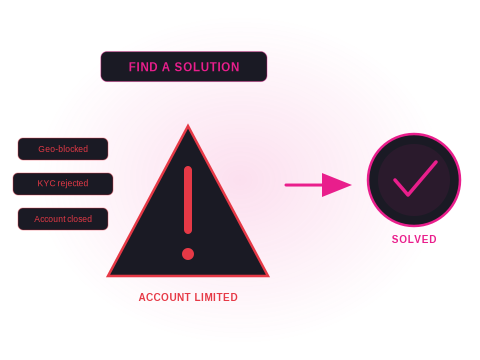
You try to access a bookmaker, maybe via a link you've seen recommended, or after researching a sharp book with better odds than what's available to you locally. The site loads. Then you're redirected, or shown a message saying your country isn't supported. Sometimes you get further into registration before a system check blocks you instead.
This is geo-blocking, the technical enforcement of country-based access restrictions. It's a standard part of how regulated online gambling platforms operate, and honestly, once you understand how it actually works, it's much easier to see why certain workarounds fail and which approaches lead to something sustainable.
How Bookmaker Geo-Blocking Actually Works
The IP address is the most visible enforcement mechanism. When you connect to a website, your IP address reveals your approximate location, and that's how bookmakers identify a visitor connecting from a restricted country and redirect them or block registration.
But IP addresses are only the starting point. Modern bookmakers layer their detection: your payment method carries geographic information (your bank is based in your country, your card's BIN code identifies its country of issue), your billing address is entered at registration, your browser may expose locale settings, and during identity verification your proof of address document confirms your actual location. The geo-block at the connection level is just the first filter. KYC is the one that actually matters.
Some bookmakers also use device fingerprinting, identifying a device not just by its IP but by a combination of browser version, installed fonts, screen resolution, and other factors. A device previously associated with a restricted location can get flagged even when connecting through a different IP entirely.
Worth saying plainly: even if you change your IP, you'll likely hit a mismatch the moment you try to verify your identity. And for a regulated bookmaker, identity verification isn't optional. They're legally required to complete it, which means they'll end up with your actual address regardless of how you first connected.
Why VPNs Create More Problems Than They Solve
A VPN (Virtual Private Network) changes your visible IP address by routing your connection through a server in another location. It is the most commonly attempted workaround for geo-blocking. For bookmaker access, it has a set of specific problems that make it unreliable.
- VPN IPs are identifiable: Major VPN providers use IP address ranges that are known and maintained in commercial databases. Bookmakers' fraud detection systems cross-reference incoming IPs against these databases. Many bookmakers specifically block known VPN IP ranges, so the connection may fail or trigger an additional review flag regardless of which country the VPN appears to route through.
- KYC defeats the VPN: The moment you provide genuine KYC documents (which you must do to withdraw funds), your actual country of residence is confirmed. The conflict between your apparent connection location and your documented location is itself a flag. No KYC submitted, no withdrawal permitted.
- Terms violations are enforced retroactively: A bookmaker can close an account at any time if they discover a VPN was used to circumvent a restriction, not just at the point of registration. This means winnings built up over months can be at risk, not just the initial deposit.
- Payment methods add another layer: Your card or bank account will be associated with your actual country. Payment mismatch with registration details is a standard fraud flag.
The risk profile of using a VPN to access a restricted bookmaker, in plain terms: potential account closure, potential fund withholding, and no recourse through any regulator since you've violated the terms yourself. The expected value is negative before you even factor in the effort.
The Pattern Most Bettors Go Through
The typical sequence goes something like this: a bettor discovers a bookmaker they want to use, finds it's restricted, looks up how to get around it, finds VPN guidance, connects via a VPN, completes registration, deposits, starts betting. Then one of two things happens. Either the account is immediately flagged and closed after KYC, or it runs for a while before a routine review surfaces the IP inconsistency and shuts it down anyway. Either way the window is temporary, and in the second scenario there's often a meaningful balance or a run of pending bets caught up in the closure.
There's a broader point beyond the individual account risk, too: the bookmakers most commonly geo-blocked tend to be the ones most worth accessing legitimately. Pinnacle, for example, is the gold standard for serious bettors, a sharp book with no limit policy. The path in for bettors in restricted countries isn't circumvention, it's the professional route that brokers provide. For more on why Pinnacle is worth the trouble, see Pinnacle's restricted country situation explained.